
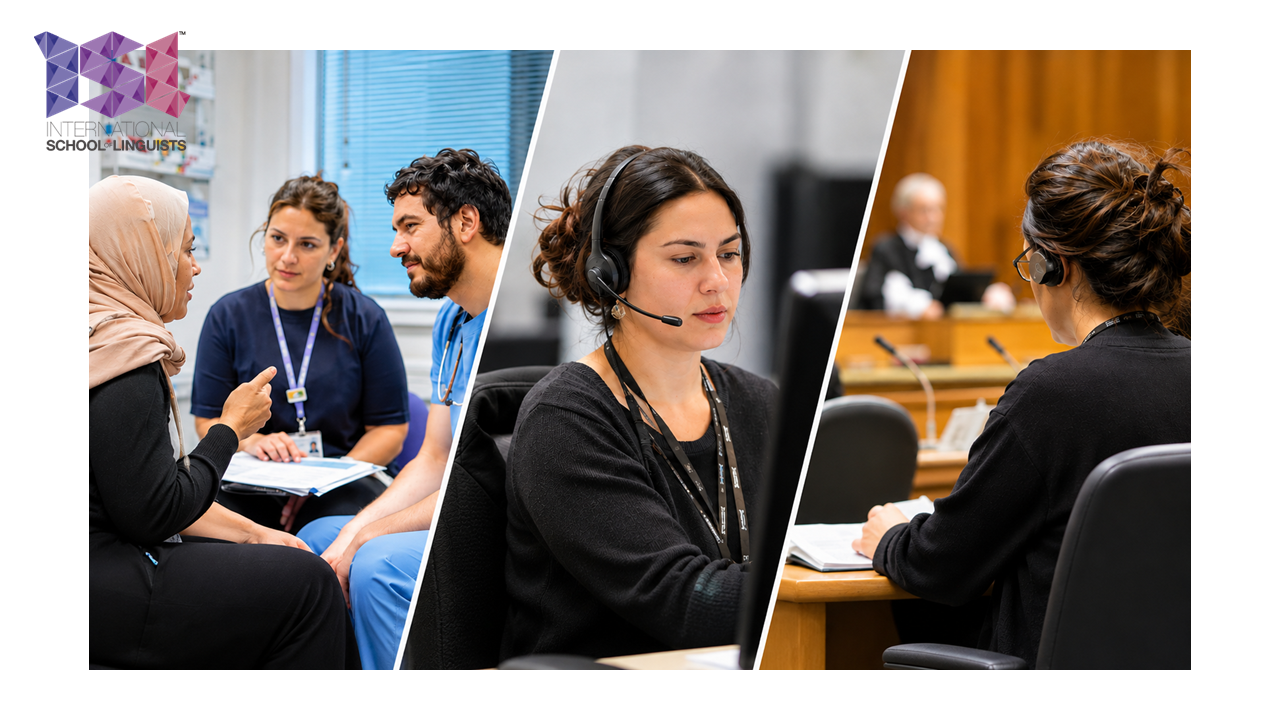

Interpreting is about much more than translating conversations. Every day, interpreters help people communicate, access essential services and make sure their voices are heard.
But where could interpreting actually take you? You might be surprised by just how many different settings need professional interpreters across the UK.
From hospitals and schools to police stations and courtrooms, here’s a look at some of the places where interpreters work.
Face-to-Face Interpreting: Working with People in Their Communities
A large part of community interpreting involves helping people communicate when accessing everyday services. You could find yourself working in a completely different setting from one day to the next.
For example:
- Hospitals and GP surgeries: Interpreting during consultations, medical appointments, mental health assessments and discussions with healthcare professionals.
- Social services: Supporting conversations with social workers, attending family meetings and interpreting during home visits with health visitors.
- Schools and education: Helping parents communicate with teachers, attending parent-teacher meetings and supporting discussions about children’s education and additional needs.
- Local councils: Helping people with housing enquiries, council applications, homelessness support and accessing local services.
- Employment services: Interpreting during Jobcentre appointments, employment support meetings and discussions about returning to work.
- Charities and support organisations: Helping refugees, asylum seekers and vulnerable individuals access advice and support.
Telephone Interpreting: Helping People Connect
Not all interpreting takes place in person. A significant amount of work happens over the telephone, with interpreters helping people communicate with organisations and services from wherever they are.
You could be interpreting calls involving:
- NHS 111 and emergency services, including 999.
- Universal Credit and other Department for Work and Pensions services.
- Gas, electricity and water companies.
- Banks, insurance companies and financial services.
- Council services and housing associations.
- Employment tribunals and disability benefit appeals.
- Healthcare providers and medical helplines.
- Customer service departments and public sector organisations.
Telephone interpreting can be particularly varied. You might help someone resolve a billing issue one moment and interpret a conversation about a benefits application the next.
Legal Interpreting: Working in the Justice System
For those who progress to Level 6 qualifications, there are opportunities to work in more specialised legal settings. This is a particularly varied area of interpreting, where accuracy, professionalism and a good understanding of legal terminology are essential.
Some examples include:
- Police stations: Interpreting during police interviews, witness statements and conversations with suspects.
- Courts: Working in Magistrates’ Courts and Crown Courts, interpreting during hearings, trials and sentencing proceedings.
- Probation services: Supporting meetings between individuals and their probation officers, as well as rehabilitation appointments and training sessions.
- Prisons: Interpreting during initial reception interviews, prison visits and meetings between prisoners and their solicitors.
- Immigration and asylum: Interpreting during Home Office interviews, asylum interviews and immigration tribunal hearings.
- Solicitors and legal professionals: Helping clients communicate with their legal representatives during consultations and case preparation.
Looking to Get Started?
If you’re interested in becoming an interpreter, choosing the right qualification is an important first step.
At International School of Linguists, we offer Ofqual-regulated qualifications to help you develop your skills and prepare for interpreting work in the UK.
Level 3 Certificate in Community Interpreting (CIC)
A great starting point if you’re looking to work in community settings such as healthcare, education, social services and local authorities.
Level 6 Diploma in Public Service Interpreting (DPSI – Law)
For those looking to develop their skills further and work in specialist legal settings, including police stations, courts, prisons and immigration services.
Level 6 Diploma in Community Interpreting (DCI)
A professional qualification for those looking to build on their interpreting experience and demonstrate their competence in community interpreting.
Could interpreting be your next career move?
Whether you’re completely new to interpreting or already have experience and want to gain a recognised qualification, we’d be happy to talk you through the options.
Get in touch with our team to find out more about our courses and how to get started.